







For decades, Toronto has been a city built on neighbourhoods, late-night conversations, independent music, and places where strangers become friends over cheap drinks and unforgettable meals.
But slowly, those places have been disappearing.
The old storefronts are gone. The independent venues have been replaced. The small restaurants that carried the personality of entire communities have given way to glass towers, luxury condos, and spaces designed for efficiency rather than character.
That is why the fight to save Sneaky Dee’s was about much more than one restaurant.
It was about saving a piece of Toronto itself.
After months of community pressure, public support, and a campaign led by longtime supporters of the venue, the developer behind a proposed 16-storey condominium project withdrew its redevelopment application — ending the immediate threat that would have demolished one of Toronto’s most recognizable cultural landmarks.
And for many Torontonians, the reaction was simple:
Sneaky Dee’s lives on.
A Toronto Institution Built on Nachos, Music, and Memories
Located at College Street and Bathurst, Sneaky Dee’s has been part restaurant, part concert venue, and part unofficial community centre for generations of Torontonians.

The story began in 1987 when Sneaky Dee’s opened as a 24-hour restaurant before eventually moving to its current College Street location in 1990. Over the years, it became deeply connected to Toronto’s alternative music scene, hosting countless local bands and becoming a launching point for Canadian artists.
It was never designed to be polished.
That was the point.
Sneaky Dee’s was the kind of place where you could walk in after a concert, sit at a worn table with friends, order a massive plate of nachos, and feel like you were part of something bigger.
Its famous Tex-Mex menu — especially the legendary nachos and late-night comfort food — became almost as iconic as the bands that played upstairs. The restaurant even developed a tradition of creating signature dishes connected to Canadian musicians, further tying food and music together.
And then there were the huevos rancheros.
For many people, a plate of breakfast food at Sneaky Dee’s was not just a meal. It was the ending of a night out, the beginning of a lazy weekend, or a place where ideas, friendships, and memories were created.
More Than a Building: A Place With Cultural DNA
 Cities are not only defined by their skyline.
They are defined by the places where people gather.
A condo tower can provide housing. A new development can bring investment. But once a cultural landmark disappears, it is almost impossible to recreate the feeling it created over decades.
You cannot manufacture history.
You cannot build a brand-new venue and suddenly give it 40 years of stories.
You cannot recreate the first show someone attended there, the friendships formed there, the musicians who played there, or the countless conversations that happened over plates of nachos at 2 a.m.
That is why Sneaky Dee’s became a symbol of a larger conversation happening across Toronto:
What happens when a city grows faster than it remembers itself?
The Disappearing Character of Toronto
Toronto has always been a city of neighbourhood personalities.
Kensington Market had its independent shops.
Queen Street West had its artists and musicians.
The Danforth had its community gathering spaces.
College Street had its unique mix of restaurants, bars, bookstores, music venues, and independent businesses.
But as development accelerates, many Torontonians feel the city is losing the unpredictable character that made it special.
The danger is not growth itself.
Cities need growth.
The danger is creating a city where every block looks the same.
A city needs both: new buildings and old stories. New residents and longtime communities. Modern infrastructure and spaces that carry cultural memory.
Sneaky Dee’s represents that balance.
A Victory for Toronto’s Independent Spirit!
The withdrawal of the redevelopment proposal showed something important:
People still care about the places that make Toronto different.
Thousands of people rallied behind the venue because they understood that protecting culture is not about preserving the past — it is about protecting the identity of the future.
A city without independent restaurants, music venues, artists, and community spaces becomes just a collection of buildings.
A city with character becomes a home.
Celebrating Toronto’s Stories Through Art
Preserving places like Sneaky Dee’s is one way we protect Toronto’s identity.
Another way is through art.
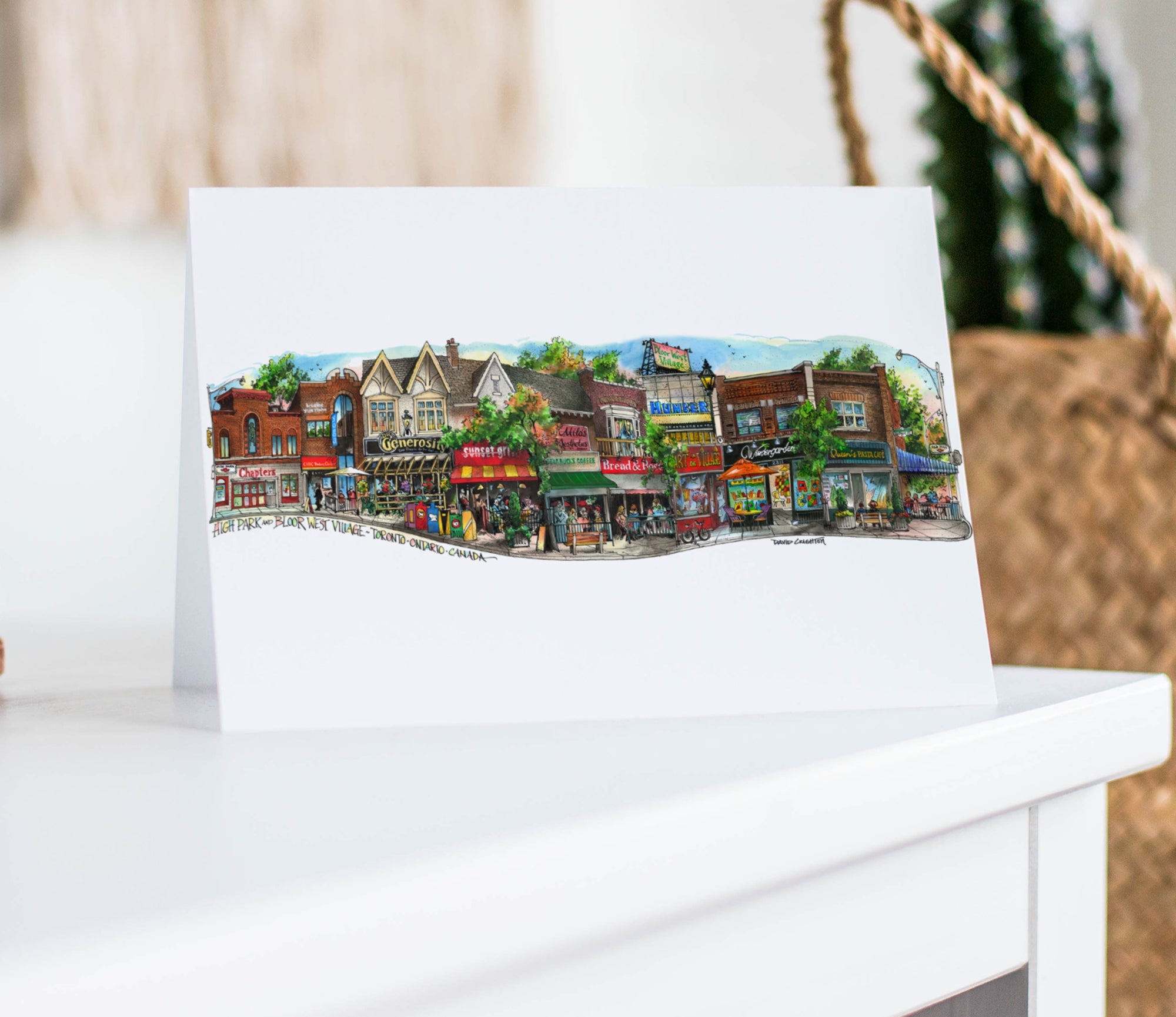
At Totally Toronto Art Inc., the mission is built around celebrating the landmarks, neighbourhoods, and moments that make Toronto unique.
Through Toronto-inspired artwork, the city’s streets, architecture, and cultural icons are transformed into pieces that preserve memories and celebrate local identity.
Because cities are more than concrete and steel.
They are the restaurants where we celebrated, the venues where we discovered music, the streets where we made memories, and the places that became part of who we are.
Sneaky Dee’s was saved because people recognized its value.
The next challenge is making sure Toronto continues to protect the stories that make it worth saving.


Leave a comment